What Are the Top Centrifugal Pump Manufacturers in China?
China has become a major production base for industrial pumping equipment, supported by strong manufacturing capacity and expanding infrastructure demand. Grand View Research’s Industrial Pumps Market report identifies Asia Pacific as the leading regional market, driven by water treatment, construction, power generation, and process industries. The report also indicates continued demand for energy-efficient pumping systems. That demand has increased attention on Chinese centrifugal pumps.
Numbers matter.
This article examines leading centrifugal pump manufacturers in China through practical purchasing criteria, not brand visibility alone. The comparison considers hydraulic performance, motor efficiency, material selection, quality systems, testing facilities, export experience, and after-sales support. Manufacturers such as Kaiquan, Liancheng, East Pump, and other established suppliers may serve different applications. A municipal water project needs different priorities from a refinery, mining site, or chemical plant. Operating temperature, fluid composition, head, flow rate, and maintenance access can change the correct choice completely.
Industry standards provide useful reference points. ISO 5199 addresses technical requirements for centrifugal pumps, while API 610 is widely used for demanding petroleum and petrochemical applications. Reports from MarketsandMarkets and Fortune Business Insights also connect pump-market growth with industrial automation, water security, and energy-efficiency investment. However, market reports are not flawless. Rankings may reflect revenue, shipment volume, or visibility rather than long-term field reliability. A large catalog proves little by itself. Buyers should request performance curves, factory test records, seal details, spare-parts policies, and verified customer references. The strongest manufacturer is not always the largest one. It is the supplier whose equipment performs consistently in the buyer’s actual operating conditions.
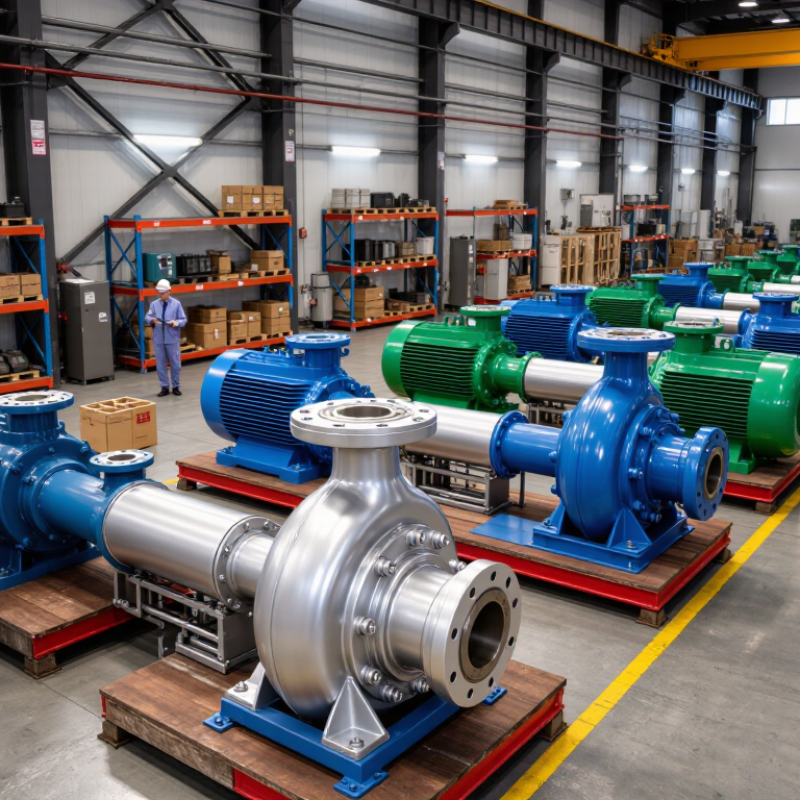
How Centrifugal Pumps Work: Flow, Head, Efficiency, and NPSH Metrics
Centrifugal pumps convert rotational energy into fluid velocity, then pressure. In practical testing, flow is measured in cubic meters per hour, while head is measured in meters. Head describes energy added per unit weight, not simply discharge pressure. A pump may deliver 50 m³/h at 30 meters head, but not at every operating point. The impeller, casing, speed, and fluid density shape the pump curve. That curve matters.
When comparing centrifugal pump manufacturers in China, efficiency deserves careful attention. Efficiency compares useful hydraulic power with shaft or motor input power. Hydraulic power can be estimated as ρgQH, using consistent units. At the best efficiency point, vibration and recirculation are usually lower. Running far left can cause overheating and internal recirculation. Running far right may overload the motor and reduce head. I have seen operators trust catalog ratings too much. Real pipes add elbows, valves, fouling, and elevation changes.
NPSH is often misunderstood. NPSH available depends on atmospheric pressure, liquid temperature, suction losses, and installation height. NPSH required comes from pump testing and rises with flow. Available NPSH should exceed required NPSH with a sensible margin, not a hopeful guess. Cavitation can sound like gravel inside the casing. It damages surfaces and destabilizes performance. Check suction piping, strainers, temperature, and actual flow before changing the pump. I would still verify site data twice; one bad gauge can mislead an entire selection.
China’s Pump Industry: Water, Energy, Chemical, and HVAC Demand Data
China’s pump industry is being shaped by practical demand, not only factory capacity.
Water remains the largest field, covering municipal supply, wastewater treatment, irrigation, and industrial reuse. Recent public data shows China’s urbanization rate has passed 65%, increasing pressure on reliable water transfer and sewage systems. Large cities now need pumps that operate continuously, with lower leakage and electricity consumption.
Energy demand is changing pump specifications.
Coal, gas, nuclear, and renewable projects require circulation, cooling, drainage, and feedwater equipment. Chemical production adds stricter requirements for corrosion resistance, sealing, and material traceability. A pump handling acids cannot be judged by flow rate alone. Temperature, concentration, maintenance access, and failure risk matter equally.
HVAC is another strong demand source,
especially in commercial buildings, hospitals, data centers, and industrial parks. Variable-speed pumps help match cooling loads and reduce wasted power, although real savings depend on system design and controls. The strongest manufacturers usually provide testing records, hydraulic curves, spare parts, and local technical service. Some market statistics differ between research firms, so buyers should question impressive growth figures. Factory visits and performance testing remain more convincing than polished brochures.
Top Chinese Manufacturers: Kaiquan, Liancheng, CNP, and Eastpump Compared
Chinese centrifugal pump manufacturing is not a single market. Four major suppliers show different strengths in municipal water, industrial processing, and export projects. Manufacturer A is often evaluated for its broad product range and strong presence in large water infrastructure. Manufacturer B tends to attract buyers needing customized pump configurations, especially for drainage and building services. Manufacturer C has practical experience with agricultural, utility, and industrial pumping systems. Manufacturer D is commonly considered when flexible production and project-specific support matter. These differences are more useful than a simple popularity ranking.
In technical reviews, I compare hydraulic efficiency, shaft sealing, bearing design, vibration, and spare-parts availability. A pump handling clear water may perform well with standard mechanical seals. It may struggle with abrasive slurry. Check the actual duty point, not only the catalog maximum. A 45-kilowatt motor, an 80-millimeter discharge, and a six-meter lift can produce very different results across models. Request factory performance curves and witnessed test records when the project is critical. Also verify quality systems, material certificates, installation guidance, and local service response. Real experience matters here.
Pricing can mislead.
A cheaper purchase may bring higher energy costs or longer downtime. Some published data also deserves careful questioning. Curves are not always presented under identical test conditions. My comparison would remain provisional until site conditions, fluid temperature, and operating hours are confirmed. That is where many otherwise careful selections become less certain.
Supplier Benchmarks: ISO 9001, ISO 2858, GB/T 5656, and CE Compliance
When evaluating centrifugal pump manufacturers in China, supplier compliance deserves more attention than catalog promises. ISO 9001 indicates a documented quality management system, but it does not guarantee every pump performs perfectly. Ask for the certificate scope, issuing body, and latest audit status.
ISO 2858 helps buyers compare end-suction centrifugal pumps through standardized dimensions and performance references. Check the rated flow, head, speed, flange size, and efficiency against the test report. GB/T 5656 provides technical expectations for centrifugal pump manufacturing and inspection in China. Reliable suppliers should offer material certificates, hydraulic test records, and serial-number traceability. The paperwork should match the actual pump on the factory floor.
CE compliance requires careful interpretation. It applies when the equipment falls under relevant European Union requirements, such as machinery or electrical safety rules. A CE mark alone is not enough. Request the EU Declaration of Conformity, risk assessment, technical file details, and applicable test evidence. Visit the assembly area if possible. Look for labeled motors, sealed bearings, clean welds, and calibrated gauges.
Small details matter.
In practice, some suppliers present strong certificates but weak after-sales records. That gap deserves honest questioning. Delivery history, spare-parts response, and failure data may reveal more than polished brochures. A balanced benchmark combines standards, witnessed testing, production discipline, and direct technical communication. Procurement teams should also verify whether quoted performance uses water, the stated temperature, and the correct impeller diameter. Misunderstandings still happen.
Selecting a Manufacturer Through Q-H Curves, MTBF, Efficiency, and TCO
Choosing among centrifugal pump manufacturers in China requires more than comparing catalog prices. The Q-H curve should match your real operating point, not only the rated flow. Ask for factory-tested curves, test conditions, fluid temperature, and measurement tolerance. A pump delivering 180 cubic meters per hour at 45 meters may perform differently after piping losses change the system resistance.
Numbers can mislead. Demand evidence.
During supplier evaluation, review MTBF records from similar installations and inspect how failures are classified. A high MTBF figure means little without duty conditions, seal type, operating hours, and maintenance history. Check whether the manufacturer controls casting quality, shaft balance, impeller machining, and final assembly under documented procedures. Independent test reports can strengthen confidence, especially when the data includes vibration and power readings.
Efficiency affects more than the electricity bill. Compare wire-to-water efficiency at several points on the Q-H curve, because a pump may be efficient near its best efficiency point but waste energy during daily fluctuations. Then calculate total cost of ownership, including purchase price, installation, spare parts, downtime, inspection, and energy over the planned service life. I once saw a low-cost option require frequent seal replacement; the original saving disappeared quickly. That example is not universal, but it deserves attention. Ask for lifecycle assumptions in writing, and challenge optimistic service intervals.