Why Choose a Positive Displacement Water Pump?

Water movement is rarely just about pressure and flow. A pump may fill a tank, feed a filter, or dose water through narrow tubing. In each case, the wrong operating principle can waste energy and shorten equipment life. A positive displacement water pump moves a defined volume during each cycle. This makes flow more predictable, especially when pressure changes or water contains small suspended particles.

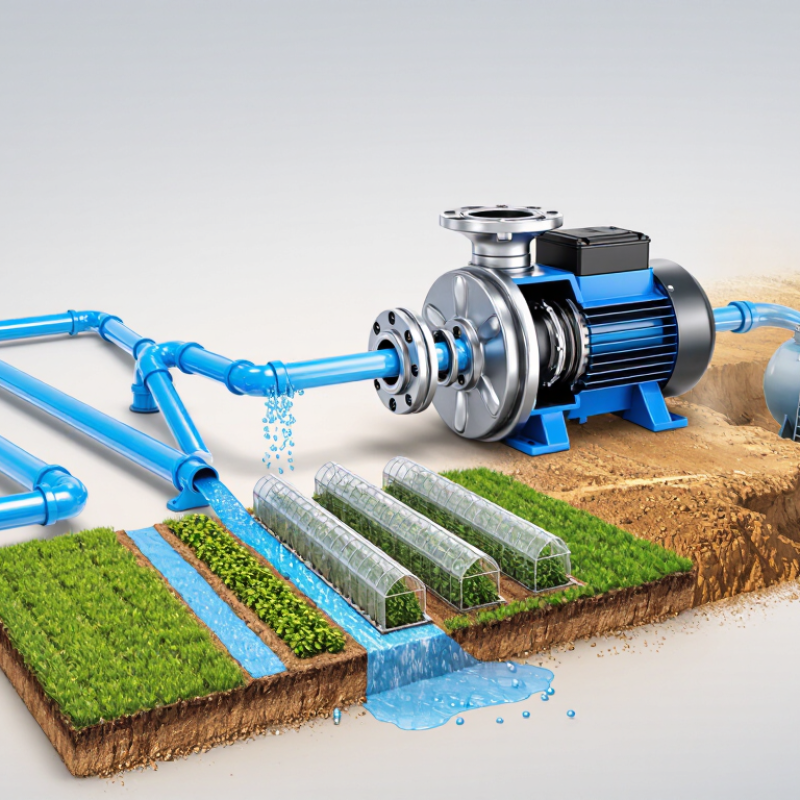
The UN World Water Development Report 2024 states that agriculture accounts for about 70% of global freshwater withdrawals. That figure gives pump selection a practical urgency. Even a small irrigation system can run for hours beside dusty fields, where unstable flow causes uneven watering. Positive displacement designs, including rotary lobe, diaphragm, and progressive cavity pumps, can support controlled delivery in such conditions. The U.S. Department of Energy also emphasizes that pumping-system efficiency depends on correct sizing, operating conditions, and system design—not pump efficiency alone. That caveat matters.

There is no universal winner.

A positive displacement water pump can provide strong low-flow performance, accurate dosing, and useful suction capability. However, it may require pressure relief protection and careful management of abrasive fluids. Hydraulic Institute standards stress that pump selection should reflect duty point, viscosity, temperature, materials, and maintenance requirements. Those details can change the decision completely. A pump that performs quietly in a clean-water laboratory may struggle beside a muddy construction tank. This is where practical experience becomes valuable. Operators should compare lifecycle cost, service access, seal wear, and energy use before choosing. The choice is powerful, but not automatically perfect.
Why Choose a Positive Displacement Water Pump?

What Is a Positive Displacement Water Pump?

Why Choose a Positive Displacement Water Pump?

What Is a Positive Displacement Water Pump?

A positive displacement water pump moves a fixed volume during every operating cycle. Internal gears, diaphragms, pistons, or screws trap water and push it toward the outlet. Unlike centrifugal pumps, it does not mainly depend on impeller speed to create flow. Each cycle produces a predictable amount of movement.

That makes this pump useful when steady delivery matters. It can maintain flow at lower speeds and handle water with moderate viscosity or small suspended particles. I have seen operators use compact units for pressure boosting, dosing, and water transfer in confined spaces. A small pump can deliver strong pressure.

Flow follows speed.

However, pressure can rise quickly if the discharge line becomes blocked. A correctly sized relief device and pressure gauge are essential. I once underestimated the effect of a narrow outlet, and the pump overheated within minutes. The lesson was uncomfortable but practical: pressure protection cannot be treated as an optional detail.

Positive displacement pumps may also create pulsation, noise, or faster seal wear when poorly matched to the system. Selection should consider flow rate, pressure, fluid temperature, particle content, duty cycle, and maintenance access. Water may seem simple, but dirty water can change the decision.

How Does a Positive Displacement Water Pump Work?

A positive displacement water pump moves water by trapping a measured volume and forcing it forward. Internal gears, diaphragms, pistons, or screws create sealed chambers. As the chamber expands, water enters through the suction side. It then contracts, pushing water into the discharge line.

The process is mechanical and repeatable. Flow mainly follows pump speed, not pressure alone. Hydraulic Institute guidance explains that positive displacement pumps can deliver nearly constant volume per cycle, even when system resistance changes. That makes them useful for dosing, filtration, and high-pressure water transfer. The U.S. Department of Energy’s Improving Pumping System Performance sourcebook reports that pumping systems may consume about 25% of industrial electricity. Efficiency matters here. Small losses become expensive.

Pressure still depends on the pipe network. A blocked outlet can make pressure rise rapidly. A relief valve is essential. Never treat it as optional. Field experience also shows that water temperature, air leaks, seal wear, and poor alignment reduce real performance. A pump may meet its rated flow in a test room, yet perform differently beside a vibrating pipe. The DOE Pumping System Assessment Tool highlights the value of matching pump capacity with actual system demand. That point is easy to overlook. Engineers should measure flow, pressure, and operating hours before selecting a pump. Separting theory from site conditions is not always easy.

Why Choose a Positive Displacement Water Pump?

A positive displacement pump moves a fixed volume of water during each rotation. The chart shows the ideal flow produced by a 50 cm³/revolution pump at different speeds. Flow is calculated using: Q = displacement × speed.

Unlike a centrifugal pump, a positive displacement pump can maintain a more predictable flow as pressure changes. Actual flow may be lower because of leakage, fluid viscosity, wear, and volumetric efficiency.

What Are the Main Types of Positive Displacement Pumps?

Why Choose a Positive Displacement Water Pump?

What Are the Main Types of Positive Displacement Pumps?

Positive displacement pumps move a fixed volume during each cycle. They suit water services requiring steady flow, accurate dosing, or higher pressure. U.S. Department of Energy guidance reports that pumping systems can consume 25% to 50% of electricity in some industrial facilities. Correct pump selection therefore affects both output and operating cost.

The main types are rotary and reciprocating pumps. Rotary models use gears, screws, lobes, or vanes to carry water through a casing. They provide smooth delivery and work well with compact, continuous-duty systems. Reciprocating pumps use pistons, plungers, or diaphragms. Their pulsing flow supports high-pressure cleaning, metering, and demanding transfer duties. Pulsation dampeners may be needed.

Peristaltic pumps form another practical group. A rotating roller compresses flexible tubing, keeping the fluid inside a sealed path. This design helps protect sensitive water streams from contamination. It also handles fluids containing suspended particles, although tubing wear requires regular inspection.

The Hydraulic Institute stresses that positive displacement pumps need pressure-relief protection because blocked discharge lines can cause rapid pressure rise.

That detail is easy to miss.

In field work, operators sometimes focus on flow rate and overlook viscosity, temperature, suction conditions, and maintenance access. A pump may meet the specification on paper, yet perform poorly after installation. Performance testing remains necessary.

Why Choose a Positive Displacement Water Pump?

Why choose a positive displacement water pump? It delivers a measured volume during each operating cycle. This action creates steady flow, even when discharge pressure changes. For water transfer, dosing, filtration, and pressure washing, that control can be valuable. The pump does not simply push water faster. It moves it deliberately.

In practical maintenance work, technicians often notice consistent output at low speeds. A tank may fill at a predictable rate, while a pressure gauge responds clearly. This helps when water must reach a fixed point or pass through narrow piping. Positive displacement pumps can also perform well against higher resistance than many standard centrifugal pumps. However, they need careful protection. A blocked outlet can produce dangerous pressure quickly. A correctly sized relief valve is essential.

Selection still requires honest checking. Flow demand, pressure, water temperature, pipe size, and operating hours all matter. Pulsation may appear, especially with reciprocating designs. An accumulator or pulsation dampener can reduce it. Maintenance is not always simple. Seals, valves, and internal clearances may need regular inspection. Some systems are oversized because pressure was guessed, not measured. That mistake wastes energy and shortens service life. A modest pump, correctly matched to the real duty, often proves more dependable.

How to Select and Maintain the Right Pump

Selecting a positive displacement water pump starts with the liquid, not the catalog. Measure viscosity, temperature, solids, suction conditions, and required flow. A rotary pump suits steady, metered transfer, while a reciprocating design handles higher pressure and lower flow. Do not oversize it. Excess capacity can increase bypass losses, heat, and maintenance.

The U.S. Department of Energy reports that pumping systems may consume 25% to 50% of industrial electricity in some facilities. That figure makes selection more than a purchasing decision. Check the pump curve at the actual duty point, then confirm motor efficiency, relief-valve settings, and pipe friction. Hydraulic Institute guidance also emphasizes operating near the intended design range. In field work, I have seen a small suction restriction create noise, vibration, and unstable flow. The pump was not the real problem. The installation was.

Tips: Record pressure, flow, temperature, and vibration during normal operation. Inspect seals, bearings, filters, and relief devices on a fixed schedule. Use a calibrated flowmeter when verifying performance. Keep a service log with dates and readings. Do not rely on sound alone. If performance falls, check clogged strainers and air leakage before replacing the pump. A practical mistake is treating maintenance intervals as permanent rules; dirty water and frequent starts may require shorter intervals. Allow for that.

Why Choose a Positive Displacement Water Pump? - How to Select and Maintain the Right Pump

Selection or Maintenance Factor Why It Matters Recommended Guidance Practical Check
Pump operating principle A positive displacement pump moves a defined volume during each cycle or revolution, making it suitable for controlled flow and high-pressure service. Choose it when stable flow, accurate dosing, or high differential pressure is more important than simple low-cost transfer. Confirm the required flow, pressure, fluid temperature, viscosity, and duty cycle before selection.
Required flow rate Flow determines pump displacement, speed, pipe sizing, and motor capacity. Select a pump whose rated capacity covers the normal operating point without routinely operating at its maximum rating. Record normal flow and peak flow separately; account for speed changes, slip, and fluid viscosity.
Discharge pressure Positive displacement pumps can continue generating pressure when downstream resistance increases. Install a correctly sized relief valve or pressure-limiting device because dead-heading can damage the pump, piping, or motor. Include static head, friction loss, valves, filters, elevation, and any required safety margin in the pressure calculation.
Fluid viscosity Higher viscosity generally increases friction and power demand, but it can reduce internal slip in a positive displacement pump. Use viscosity data at the actual pumping temperature, not only at room temperature. Check start-up viscosity, minimum operating temperature, and whether heating or insulation is required.
Water quality and solids Abrasive particles can wear gears, rotors, valves, diaphragms, and sealing surfaces. Use a suitable strainer or filtration system when allowed by the process; select wear-resistant components for abrasive water. Specify particle size, concentration, hardness, and whether the solids are suspended or settling.
Pump type Different positive displacement designs handle pressure, solids, shear sensitivity, and chemical compatibility differently. Use gear pumps for clean, lubricating fluids; diaphragm pumps for metering or chemically demanding service; piston or plunger pumps for high pressure; progressive cavity or peristaltic pumps for viscous or solids-containing fluids. Match the pump design to fluid cleanliness, viscosity, solids content, pulsation tolerance, and required pressure.
Suction conditions Insufficient inlet pressure can cause cavitation, loss of capacity, noise, vibration, and premature wear. Keep suction piping short and adequately sized, minimize unnecessary restrictions, and verify the pump’s required inlet conditions. Check tank level, suction lift, pipe diameter, inlet temperature, strainer condition, and available NPSH where applicable.
Pulsation control Reciprocating positive displacement pumps may produce periodic flow and pressure pulsations. Use a pulsation dampener, flexible connector, or suitable control strategy when the process or piping cannot tolerate pulsation. Review pressure fluctuations, instrument stability, pipe support, and downstream equipment limits.
Seal and material compatibility The wrong elastomer, metal, coating, or diaphragm material can cause leakage, swelling, corrosion, or early failure. Select wetted materials according to water chemistry, temperature, pressure, and any treatment chemicals. Verify pH, disinfectant concentration, temperature range, chemical exposure, and regulatory requirements.
Energy and drive system Motor power rises with flow, pressure, viscosity, speed, and mechanical losses. Size the motor and coupling for the full operating range, including start-up conditions and overload protection. Check motor current, rotation direction, speed, gearbox ratio, coupling alignment, and electrical protection.
Routine inspection Early detection of leakage, vibration, noise, temperature rise, and reduced flow can prevent major failures. Inspect the pump and drive during each operating shift or according to the site maintenance plan. Record pressure, flow, motor current, bearing temperature, vibration, noise, and visible leakage.
Lubrication Correct lubrication reduces friction and protects bearings, gears, and drive components. Follow the pump manufacturer’s lubricant type, quantity, cleanliness, and replacement interval. Check oil level or grease condition; do not mix incompatible lubricants or over-lubricate bearings.
Filters and strainers Blocked inlet screens increase suction losses and may cause starvation or cavitation. Clean strainers based on differential pressure, flow reduction, or a defined inspection schedule. Install accessible pressure gauges or differential-pressure indicators where practical.
Relief valve testing A relief valve provides protection against excessive discharge pressure, but it is not a substitute for correct system design. Test the valve at planned intervals and confirm that its discharge path returns safely to the correct tank or line. Check the set pressure, valve cleanliness, spring condition, and signs of repeated bypassing.
Shutdown and storage Residual water or chemicals may cause corrosion, freezing damage, contamination, or seal deterioration. Flush, drain, preserve, and protect the pump according to the fluid and expected storage duration. Isolate energy, relieve pressure, drain the casing, protect ports, and document the restart procedure.

Note: Performance ranges and maintenance intervals are application-dependent. Final pump selection should be verified against the operating curve, installation conditions, fluid properties, and applicable safety requirements.