2026 Best Types of Industrial Pumps for Global Buyers

Choosing the best industrial pumps for 2026 requires more than comparing flow rates and purchase prices. Global buyers must examine fluid properties, system pressure, temperature, corrosion risks, maintenance access, and lifecycle energy use. A chemical plant may need a sealless magnetic-drive pump, while a municipal facility may favor a high-efficiency centrifugal model. The details decide reliability.

The U.S. Department of Energy reports that pumping systems can consume about 25% of industrial motor energy. Its Pumping System Sourcebook also highlights major savings from correct sizing, controls, and maintenance. The International Energy Agency continues to identify motor-driven equipment as a significant global efficiency opportunity. Market forecasts remain positive, although estimates differ. Global Market Insights places the industrial pump market above USD 70 billion in recent assessments, with continued expansion expected through the next decade.

Numbers can vary.

Pump specialist Dr. Lev Nelik has emphasized, “The pump is only one part of the system.” That warning remains practical in 2026. A highly efficient pump cannot compensate for an oversized pipe, a clogged strainer, or unstable suction conditions. This guide compares centrifugal, positive displacement, diaphragm, gear, screw, submersible, and magnetic-drive designs for international procurement teams. It considers efficiency, materials, certifications, spare parts, installation conditions, and total cost of ownership. Some recommendations may still require revision after site testing. That is not a weakness. Real systems often behave differently from spreadsheets. Reliable selection combines published data, field experience, and careful verification with qualified engineers and manufacturers.
2026 Best Types of Industrial Pumps for Global Buyers

Industrial Pump Classification by Operating Principle and Design

2026 Best Types of Industrial Pumps for Global Buyers

Industrial Pump Classification by Operating Principle and Design

Industrial pumps are commonly classified by operating principle and physical design. This distinction helps buyers match equipment with real process demands.

Centrifugal pumps use rotating impellers to transfer liquid continuously. They suit water, cooling fluids, and many low-viscosity liquids. Positive displacement pumps move fixed volumes through gears, screws, pistons, or diaphragms. They perform better with thick fluids, dosing tasks, and higher discharge pressures. Not every fluid behaves predictably.

Design classification adds another practical layer. End-suction pumps are compact and simple to service. Split-case pumps support large flow rates and easier access for maintenance. Multistage pumps use several impellers to build higher pressure. Vertical pumps save floor space, while submersible designs operate directly inside tanks or wells. Materials, seals, and motor protection also affect reliability. A pump may look suitable but fail quickly with abrasive particles, heat, or dry running.

Global buyers should check flow, head, temperature, viscosity, solids content, voltage, and installation conditions. Ask for certified performance curves and clear maintenance requirements. In field inspections, incorrect flow estimates often cause more trouble than weak hardware. I have seen pumps oversized for safety, then run inefficiently for years. The neatest classification chart can still mislead. Real operating data matters.

Centrifugal Pumps: Types, Features, and Typical Applications

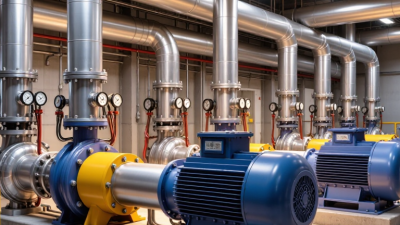
Centrifugal pumps convert rotating energy into fluid velocity and pressure. Their simple flow path suits water, chemicals, cooling circuits, and process transfer.

Common families include end-suction, horizontal split-case, multistage, vertical turbine, and magnetic-drive designs. End-suction units fit general utility duties. Split-case models handle higher flows with accessible bearings. Multistage pumps create higher pressure through several impellers. Vertical turbine pumps work well in deep wells and intake stations.

Selection depends on flow, pressure, temperature, solids, viscosity, NPSH, and installation height.

Energy deserves early attention. The U.S. Department of Energy’s Improving Pumping System Performance sourcebook reports that pumping systems may consume 25–50% of industrial facility electricity. That range is broad, but it exposes a costly mistake: choosing by purchase price alone.

Buyers should compare wire-to-water efficiency, operating hours, impeller trim, variable-speed control, and life-cycle cost. Hydraulic Institute guidance also emphasizes operation near the best efficiency point, where vibration and recirculation risks are generally lower.

Still, field conditions change. A pump selected from a clean datasheet may struggle with seasonal viscosity or clogged strainers.

For critical process service, buyers often specify ISO 5199 or API 610 requirements, then verify materials and test records. Duplex stainless steel may resist chloride-rich water, while cast iron can suit cleaner duties. Mechanical seals, elastomers, and motor protection need equal scrutiny.

The weak point is often not the pump. It is the data. Confirm actual flow, pressure, suction conditions, voltage, and standby philosophy with site operators. In my experience, a modest design margin is safer than excessive oversizing, although every plant deserves a fresh hydraulic review.

Positive Displacement Pumps: Main Designs and Industrial Uses

Positive displacement pumps move a fixed volume during each cycle, making them valuable when flow accuracy matters. They build pressure by trapping liquid and forcing it through an outlet. Flow remains steady, even at low speeds. Small details matter.

Gear pumps suit clean oils, lubricants, polymers, and other viscous liquids. Their compact bodies work well in hydraulic systems and chemical dosing skids. Screw pumps handle thicker fluids with lower pulsation. They are common in fuel transfer, wastewater sludge, and marine loading systems. However, abrasive particles can quickly damage internal surfaces.

Lobe pumps use rotating lobes without direct contact, supporting hygienic transfer in food, beverage, and pharmaceutical processing. Diaphragm pumps separate the liquid from moving parts, which helps with corrosive chemicals and contaminated fluids. Air-operated designs can tolerate dry running, but compressed-air use may raise operating costs. Piston and plunger pumps deliver high pressure for water injection, metering, and cleaning equipment. Their seals need careful inspection.

In field selection, buyers should check viscosity, temperature, solids content, pressure, and required flow range. A pump that performs well with oil may struggle with a shear-sensitive coating. I have seen specifications focus on maximum pressure while ignoring inlet conditions. That mistake can cause cavitation, vibration, and early seal failure. Ask for tested performance data, materials information, and maintenance access before approving the design.

Specialized Industrial Pumps for Challenging Fluids and Conditions

Industrial pumps face more than ordinary water service. Slurry pumps handle abrasive mixtures with sand, ash, or mineral particles. Diaphragm pumps suit corrosive chemicals and fluids containing suspended solids. For thick oils, resin, or food-grade compounds, progressive cavity pumps provide steady, low-shear flow.

High-temperature service demands careful material selection. Magnetic-drive pumps can reduce seal leakage, while multistage pumps support high-pressure systems. However, no pump solves every problem. A pump rated for chemical resistance may still fail under sudden temperature changes. Viscosity also changes with temperature, which can reduce flow and increase motor load. Field inspections should check pipe alignment, vibration, seal condition, and suction pressure before replacement decisions.

Tips: Match the pump to fluid chemistry, particle size, temperature, viscosity, and required flow. Ask for tested performance curves, not attractive claims. Install strainers only when they will not restrict suction. Keep a record of vibration and energy use. Small changes often reveal wear early. Leave room for doubt; operating conditions may differ from laboratory data.

How Global Buyers Compare Pump Capacity, Materials, and Efficiency

2026 Best Types of Industrial Pumps for Global Buyers

Global buyers should compare pumps at the real duty point, not only by maximum capacity. Flow rate, head, fluid temperature, and viscosity must match daily operating conditions. A pump rated at 300 m³/h may waste energy if the system normally needs only 180 m³/h. The U.S. Department of Energy reports that pumping systems can consume a significant share of industrial electricity, making efficiency a purchasing issue, not a technical detail. The International Energy Agency also notes that motor-driven systems use more than half of global electricity.

Tips: Request a duty-point curve, efficiency curve, NPSH data, and tested material specifications. Check performance at partial load, where many pumps operate most of the time.

Material selection requires practical judgment. Stainless steel suits many corrosive fluids, while ductile iron can offer strong value in less aggressive water service. However, fluid chemistry, solids content, seal design, and temperature can change the decision. ISO 2858-based dimensions may simplify replacement planning, but dimensional compatibility does not guarantee equal performance. Buyers should compare hydraulic efficiency near the best efficiency point, lifecycle energy cost, spare-part access, and service records. The Hydraulic Institute emphasizes system-level assessment because throttling, oversized motors, and poor controls can erase efficiency gains. I would still challenge one common assumption: the highest efficiency figure is not always the best purchase. A smaller, correctly selected pump may perform better in the field. Forecasts are imperfect, and operating conditions often change.

2026 Best Types of Industrial Pumps for Global Buyers

How Global Buyers Compare Pump Capacity, Materials, and Efficiency

The chart compares representative industrial duty points. Centrifugal pumps generally provide high efficiency for clean or moderately contaminated liquids, while positive-displacement pumps are preferred for high-viscosity fluids, accurate dosing, or high-pressure service. Actual capacity and efficiency depend on pump size, fluid properties, speed, materials, and operating conditions.

Typical materials considered by global buyers: cast iron or ductile iron for general water service, stainless steel for corrosive or hygienic applications, and engineered alloys or elastomers for aggressive chemicals.