In 2026, choosing a lube oil pump is not a simple matter of comparing flow rates. The right design must deliver clean, steady oil at the required pressure, temperature, and viscosity. The U.S. Department of Energy’s Improving Pumping System Performance: A Sourcebook for Industry estimates that pumping systems use nearly 20% of global electricity. That figure covers pumping broadly, not lube oil pumps alone, but it shows why efficiency and operating conditions deserve attention. Small losses can accumulate across a continuously running system.
Common options include gear, screw, vane, and centrifugal pumps. Gear pumps are compact and often suit steady, moderate-flow duties. Screw pumps can provide smooth delivery, including with more viscous oils. Vane pumps offer another option where flow consistency matters, while centrifugal designs may fit higher-flow applications when the system conditions support them. These are useful starting points, not universal rules. Oil viscosity changes with temperature; a pump that performs well during warm operation may struggle during a cold start. Details matter.
API Standard 614 provides requirements for lubrication, shaft-sealing, and control-oil systems in relevant machinery applications. It is a valuable engineering reference, not a substitute for checking the actual duty point, materials, and installation. No pump wins every duty. In practice, the best choice depends on the machine, oil, and operating cycle. A selection can look right on paper and still disappoint in service. This guide compares the leading lube oil pump types and the trade-offs engineers should verify before specifying one.
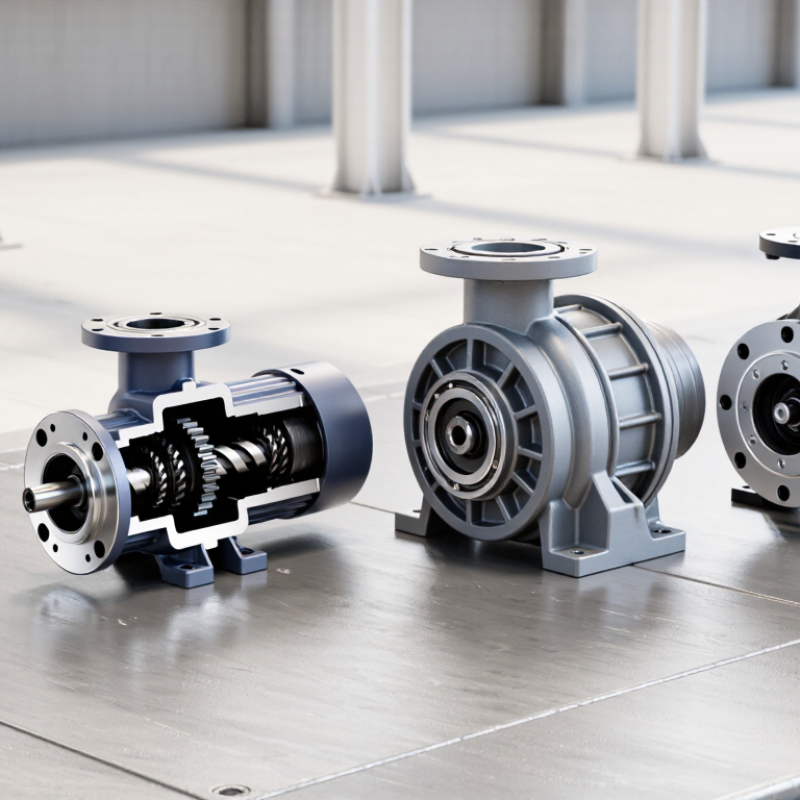
A lube oil pump does more than move oil from a tank to a bearing. It delivers a steady supply that helps separate moving surfaces, limit wear, and carry away heat. In a turbine, compressor, or gearbox, that flow must match the machine’s needs during startup and normal operation. Too little oil can leave metal surfaces poorly protected. Too much pressure can stress seals and piping.
Pump design matters. Gear and screw pumps are positive-displacement types often used with thicker oils and fairly consistent flow demands. Centrifugal pumps can suit systems requiring higher flow, especially with lower-viscosity oil. Actual performance depends on speed, oil temperature, clearances, and system resistance. A relief valve and suitable filtration also help protect the circuit. Small details count.
Operators can learn a lot from a pressure gauge, flow reading, and the sound of the pump. A new rattle, rising temperature, or foamy oil may point to air ingress, a blocked strainer, or another issue—not necessarily pump failure. A pump can look correctly sized on paper and still disappoint in service. That is easy to overlook. Regular checks, clean oil, and measurements under real operating conditions help reveal whether lubrication reaches critical parts as intended.
Lube oil pumps are classified mainly by how they move fluid. Positive-displacement pumps trap and push a set volume each cycle. Common examples include gear, screw, vane, and reciprocating piston designs. Gear pumps are compact and practical for steady oil delivery. Screw pumps usually provide smoother flow, with less pulsation. Vane pumps can handle changing flow needs, but oil cleanliness matters. A small particle can wear tight internal clearances.
Dynamic pumps, including centrifugal designs, transfer energy through a rotating impeller. They suit higher flow rates, though their output can vary with system resistance. For many lubrication circuits, predictable pressure matters more than sheer volume. The U.S. Department of Energy’s Improving Pumping System Performance guide reports that pumping systems use nearly 20% of global electricity demand. That broad figure is a reminder: pump selection and system design affect energy use, not just the pump itself. A classification chart helps, but real oil viscosity, temperature, and start-up conditions can complicate the choice.
Tips: Check the pump’s operating principle against the oil’s viscosity at both cold start and normal temperature. Confirm pressure relief protection for positive-displacement units. Then review flow at the actual operating point, not only the catalog rating. Small details matter. A tidy calculation can still miss a cold morning.
In 2026, lubrication circuits still rely mainly on positive-displacement pumps, where steady delivery matters more than headline flow. The U.S. Department of Energy’s 2006 Improving Pumping System Performance sourcebook estimates that pumping systems use nearly 20% of global electricity. It reports 25–50% of energy use in some industrial facilities. These figures cover pumping broadly, not lubrication systems alone, but they underline the value of choosing for actual duty.
Gear pumps are common in compact, fixed-flow circuits. Their simple construction suits many oils, though tight clearances make cleanliness important. Screw pumps deliver smoother flow with less pulsation and handle viscous oil well. They often fit continuous-duty systems. Vane pumps can provide controlled flow, but wear and contamination deserve attention. Small details matter.
Centrifugal pumps suit high-volume circulation where pressure demand is modest; they are less suited to precise, low-flow lubrication. Selection should reflect oil viscosity at operating temperature, required pressure, and start-up conditions—not just catalogue capacity. A pump chosen for warm oil may struggle during a cold start. The DOE figures are useful context, not a substitute for system-specific measurements.
For lube oil service, gear, screw, and vane pumps are common positive-displacement choices. Compare them at the oil’s actual operating viscosity, not just at a warm test temperature. A cold start can sharply increase torque and pressure. That matters. Check flow and differential pressure across the full speed range, then review efficiency, noise, and pulsation. Centrifugal pumps may suit higher-flow, lower-viscosity duties, but their performance can fall when oil viscosity rises.
Reliability depends on more than pump type. Review bearing and seal arrangements, materials, relief-valve protection, and the supplier’s stated operating limits. For screw and gear pumps, ask how clearances and wear affect delivered flow over time. For every type, confirm adequate inlet pressure and check for cavitation risk, especially during cold starts. ISO 5199 or API 676 requirements can help frame technical comparisons, where applicable; they do not replace duty-specific testing.
The U.S. Department of Energy’s Improving Pumping System Performance sourcebook reports that pumping systems can account for 25–50% of energy use in some industrial facilities. That makes efficiency worth measuring, but not at the expense of dependable lubrication. Compare test results at matching speed, viscosity, pressure, and flow, and track vibration, bearing temperature, leakage, and flow in service. A polished curve can mislead. Real operating conditions are messier, and maintenance history should influence the final choice.
What Are the Top Lube Oil Pump Types in 2026?
How to Select a Lube Oil Pump for an Application
Selecting a lube oil pump starts with the oil and operating conditions, not the pump label. Check the required flow rate and pressure at normal and start-up temperatures. Cold oil can be far more viscous, increasing starting torque and suction losses. A gear pump often suits steady, moderate-flow duties. Screw pumps can provide smoother delivery and handle continuous operation. Vane pumps may fit applications with clean oil and suitable viscosity. Centrifugal pumps are generally better suited to lower-viscosity fluids and operating points that match their performance curves. Small details matter.
Confirm the pump’s curve against the system’s actual pressure drop, pipework, and equipment demand. Check inlet conditions carefully; a restrictive suction line can cause noise, wear, or poor delivery. Verify that seals and wetted materials are compatible with the oil and temperature range. Consider whether the pump needs a relief valve, variable speed control, or easy access for maintenance. A calculation is useful, but it can miss real-world changes, such as a cold morning start or a partly clogged filter. Review the manufacturer’s technical data and consult a qualified engineer when duty conditions are uncertain.
Tips: Compare performance at both hot and cold oil conditions. Allow for filter loading and future flow changes. Keep suction piping short and generously sized. Record pressure, flow, and temperature during commissioning; those readings give you a practical baseline.
| Pump type | Operating principle | Typical fit | Advantages | Limitations and checks | Selection guidance |
|---|---|---|---|---|---|
| External gear | Two meshing gears carry oil from the inlet to the outlet in the spaces around the gear teeth. | General-purpose lubrication and circulation systems using clean oil across a range of viscosities. | Compact, straightforward construction; positive-displacement flow; commonly suited to steady-duty service. | Clearances can be affected by wear and abrasive contamination. Flow may be pulsating, and a relief path is needed to protect against blocked discharge. | Check viscosity at startup and operating temperature, required flow and pressure, filtration, and the pump’s allowable speed. |
| Internal gear | An inner rotor and an offset outer gear form expanding and contracting chambers that move oil through the pump. | Lubricating oils and other relatively viscous fluids where smooth, low-speed delivery is useful. | Compact design and generally smooth delivery; can handle higher-viscosity oil when correctly sized and operated. | Cold, viscous oil can increase inlet losses and starting torque. Abrasive particles can accelerate wear. | Confirm cold-start viscosity, inlet conditions, drive torque, and whether the selected model permits the required operating temperature and speed. |
| Twin- or triple-screw | Rotating screws move sealed volumes of oil axially along the screw threads. | Continuous oil circulation, bearing lubrication, and larger-flow duties where low-pulsation delivery is desirable. | Smooth, relatively quiet flow and good suitability for continuous operation with compatible lubricating oils. | Requires suitable oil cleanliness and correct inlet conditions. Performance depends on viscosity, speed, and internal clearances. | Compare flow and differential pressure across the full viscosity and temperature range; verify filtration and startup requirements. |
| Vane | Sliding vanes in a rotating rotor trap and transport oil through changing-volume chambers. | Systems needing relatively even flow with oils within the pump’s specified viscosity range. | Compact and capable of smooth delivery; some designs can provide useful self-priming characteristics. | Vanes and surfaces are sensitive to unsuitable lubrication, contamination, and operation outside specified speed or viscosity limits. | Check oil lubricity and cleanliness, minimum and maximum viscosity, and the manufacturer’s limits for pressure and speed. |
| Centrifugal | An impeller adds velocity to the oil; the casing converts part of that velocity into pressure. | High-flow, relatively low-viscosity oil circulation where the system can accommodate a non-positive-displacement pump. | Continuous flow with low pulsation and a simple flow path; often appropriate for large circulation volumes. | Flow varies with system resistance, and performance can decline as viscosity rises. It may not provide dependable flow at high viscosity or low speed. | Use the pump curve at the actual oil viscosity and operating point; check minimum flow, suction conditions, and system pressure requirements. |
| Piston or plunger metering | A reciprocating element displaces a defined volume of oil on each stroke. | Intermittent or metered lubrication points that need controlled, comparatively small oil deliveries. | Can deliver measured quantities against pressure when configured for the duty. | Pulsating output may require damping. Valves and small passages need clean oil, and the design must suit the required duty cycle. | Specify dose per cycle, delivery frequency, operating pressure, oil viscosity, and the number of lubrication points. |
| Factor | Information to establish | Why it matters |
|---|---|---|
| Required flow | Minimum and normal flow, including any startup or peak demand. | The pump must supply the lubrication points without exceeding system or component limits. |
| Pressure and system resistance | Required discharge pressure, pipe losses, filters, coolers, and pressure-control settings. | A pump’s pressure capability and flow behavior must match the complete circuit, not just the outlet connection. |
| Oil viscosity and temperature | Oil grade and viscosity at the coldest startup and hottest operating conditions. | Viscosity affects inlet losses, torque, leakage, pump efficiency, and achievable flow. |
| Suction and inlet conditions | Tank level, suction-line size and length, fittings, fluid aeration, and inlet pressure. | Poor inlet conditions can cause inadequate filling, noise, loss of performance, or damage. |
| Oil cleanliness | Contamination level, filtration arrangement, and required filter maintenance. | Particles can wear close-clearance components and metering passages; filtration must also avoid excessive inlet restriction. |
| Operating pattern and protection | Continuous or intermittent duty, speed control, standby needs, and overpressure protection. | Positive-displacement pumps require a suitable pressure-relief or bypass arrangement; duty and redundancy affect reliability. |
Note: Pump suitability depends on the specific model, oil, temperature, speed, and system operating point. Confirm final selection against the pump manufacturer’s published performance data and the application requirements.