Why Choose a Double Screw Pump for Industrial Applications?
Why Choose a Double Screw Pump for Industrial Applications?
Choosing a pump for industrial service is rarely a simple equipment decision. Product viscosity, temperature, solids content, cleaning routines, and suction conditions all matter. A double screw pump can handle many of these challenges with steady, low-pulsation flow. It is often selected for food, chemical, pharmaceutical, and personal-care processes.
Its two intermeshing screws move fluid smoothly through the casing. This action can reduce turbulence and protect sensitive products from excessive shear. The pump may also transfer liquids containing suspended particles, air, or changing viscosities. That flexibility is valuable beside storage tanks, filling lines, and heat exchangers.
Very practical.
Dr. Heinz P. Bloch, a respected rotating-equipment authority, has stated, “Reliability is designed into the system, not added after installation.” This principle fits double screw pump selection closely. Proper pipe sizing, seal choice, lubrication, and maintenance access influence performance as much as the pump itself. A stainless-steel unit with hygienic connections may look ideal, yet poor suction piping can still cause vibration and premature wear.
The technology is not perfect. It can require careful timing-gear inspection, correct operating speed, and disciplined maintenance. High purchase cost may also concern smaller plants. Still, when one pump must manage different products without damaging texture or creating strong pulsation, its operational value becomes clearer. Operators should compare total ownership cost, cleaning time, energy use, and replacement-part availability. The best choice is not always the newest pump. It is the pump that matches the process honestly.
What Is a Double Screw Pump and How Does It Work?
Why Choose a Double Screw Pump for Industrial Applications?
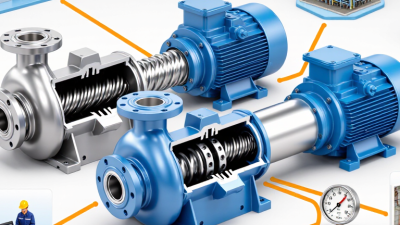
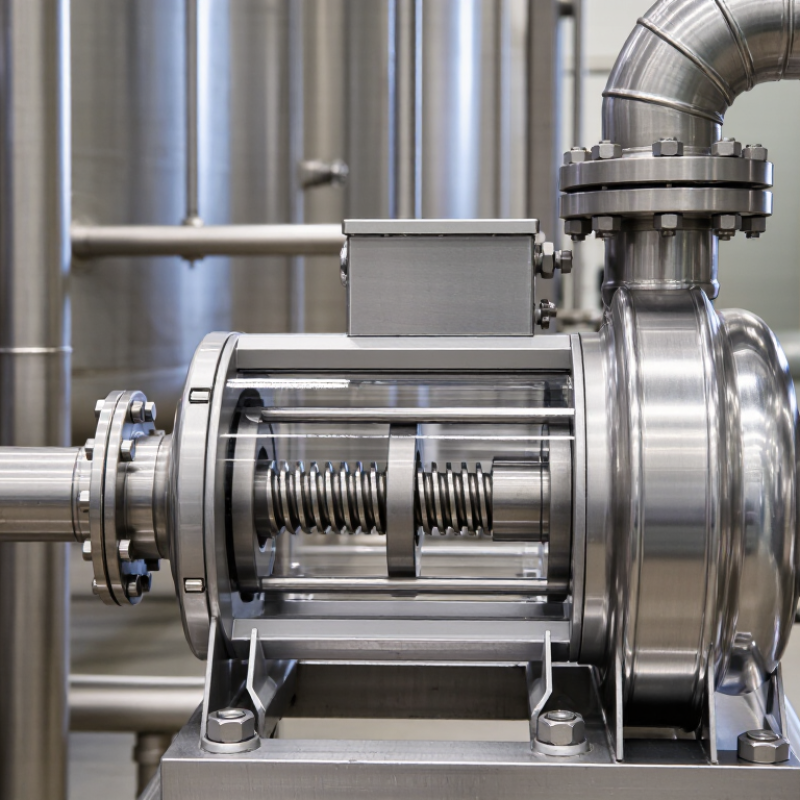
A double screw pump uses two intermeshing screws to move liquid through a sealed chamber. As the screws rotate, their flights form separate cavities. These cavities carry fluid from the suction side to the discharge side. The flow remains smooth and produces relatively low pulsation. This design can handle clean liquids, viscous fluids, and some products containing soft solids. It also supports stable operation across changing flow conditions.
Field experience shows that gentle handling can protect sensitive liquids from excessive shear. Double screw pumps are useful in food processing, chemical production, marine systems, and general fluid transfer. Their reversible operation can simplify line clearing and product recovery. However, performance depends heavily on correct sizing. Viscosity, temperature, pressure, speed, and solids content all matter. A pump selected only by flow rate may disappoint. That mistake is common. Maintenance teams should also inspect seals, bearings, and screw clearances regularly. Small wear can increase power consumption and reduce efficiency.
Tips: Confirm the fluid’s viscosity at operating temperature. Check whether the liquid contains abrasive particles. Keep suction piping short and adequately sized. Avoid running the pump dry. Do not guess. Review the actual duty cycle before choosing speed or materials. A double screw pump is powerful, but it is not automatically the best solution for every process.
What Advantages Do Double Screw Pumps Offer?
Double screw pumps offer several practical advantages in demanding industrial applications. Their two intermeshing screws move fluid with a steady, controlled flow. Flow stays steady. This reduces pulsation in connected pipes, valves, and filling equipment. The design can also handle liquids with changing viscosity, from thin solvents to thick syrups and oils.
From pump-room inspections, I have seen how this flexibility simplifies production changes. One pump may transfer, meter, and circulate the same process liquid. Its gentle conveying action can reduce shear, which helps protect emulsions, suspended solids, and delicate particles. That matters in food processing, chemical production, and wastewater treatment.
The pump can also manage fluids containing small amounts of gas without immediately losing performance. However, operators must select the correct speed and clearances. Poor settings can still cause heat, wear, or unstable flow.
Maintenance access is another useful advantage. Many double screw pumps allow inspection of internal parts without removing the entire unit. Shorter service interruptions can improve plant availability. They often support clean-in-place procedures, reducing manual handling around process lines. Still, this benefit is easy to overstate. Seal condition, lubrication, temperature, and fluid compatibility require regular checks. In real facilities, neglected maintenance remains a common weakness. A carefully specified double screw pump delivers reliable service, but installation quality and operator training matter just as much.
How Do Double Screw Pumps Compare with Other Pump Types?
Double screw pumps deserve attention because they handle changing fluids without demanding a perfectly stable process.
The U.S. Department of Energy reports that pumping systems can consume about 25% of industrial electricity. Its sourcebook also notes that optimized systems may reduce pumping energy by 20–50%. These figures make pump selection more than a maintenance decision. It affects operating cost.
Compared with centrifugal pumps, double screw pumps maintain steadier flow at low speed and higher viscosity. Centrifugal units usually perform best with clean, thin liquids and stable flow conditions. Double screw designs can move oil, syrup, emulsions, and fluids containing soft solids with relatively gentle handling. Compared with rotary lobe pumps, they often provide higher speed and smoother discharge. Progressive cavity pumps can manage viscous media well, but their stators may wear faster under heat, abrasion, or dry running.
The details matter.
A food processor may need a pump that moves cream through a narrow stainless-steel line without excessive shear. A refinery may prioritize controlled flow during temperature changes. Field teams should still question assumptions. Double screw pumps are not automatically the most efficient choice. Poor suction design, incorrect speed, or inadequate flushing can erase their advantages. Hydraulic Institute guidance emphasizes evaluating the complete pump system, not only the pump curve. That practical warning is easy to overlook.
What Factors Guide Double Screw Pump Selection and Maintenance?
Why Choose a Double Screw Pump for Industrial Applications?
Selecting a double screw pump begins with the fluid, not the catalog. Measure viscosity at operating temperature, solids content, pressure, flow range, and sensitivity to shear. A cold, heavy liquid may need heating and slower starting speed. A thin liquid may require tighter clearances and better sealing. Small details matter.
The U.S. Department of Energy reports that pumping systems can represent roughly 20–25% of industrial motor-system electricity use, depending on the sector. Efficient selection therefore deserves more attention than motor rating alone. Choose a pump near its normal operating point, then verify suction conditions, NPSH margin, torque, and pressure pulsation. API 676 provides useful guidance for rotary positive-displacement pump design and testing. It does not replace application engineering.
Maintenance should follow measured condition. Record vibration, bearing temperature, seal leakage, differential pressure, and motor current during stable operation. A sudden current rise may indicate thickened product, blockage, or internal wear. Inspect screw clearances and casing surfaces during planned shutdowns. Flush systems carefully when residue can harden.
Hydraulic Institute guidance emphasizes system-level efficiency, not pump efficiency alone. That distinction is easy to miss. In practice, operators often extend intervals too far. I would not rely on calendar dates alone. Product changes, dry running, abrasive particles, and frequent starts can shorten service life sharply. Keep a simple trend log, and review it after every process change. Some maintenance decisions remain judgment calls. That is where experienced technicians still matter.