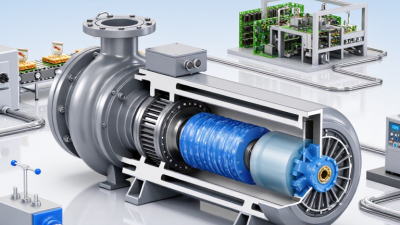
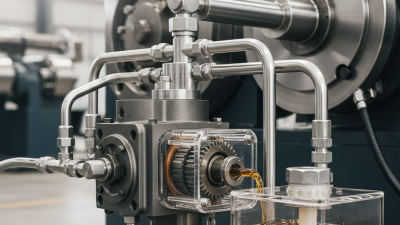
Choosing the right vacuum equipment can shape an entire industrial process. A screw vacuum pump offers steady vacuum performance, strong gas-handling capacity, and practical operating flexibility. These qualities matter in packaging lines, chemical processing, plastics production, food drying, and semiconductor support systems.
Its screw rotors compress gases smoothly inside a carefully machined chamber. Fewer contact points can reduce mechanical wear. Dry screw models also avoid oil entering the process stream. That detail matters when products must remain clean. In a busy factory, operators may value more than laboratory efficiency. They need predictable starts, manageable noise, and service intervals that fit production schedules.
Real performance depends on the application. Vapor loads, dust, temperature, and pressure targets can change the result. A pump that performs well on a clean packaging line may struggle with sticky vapors. That is easy to overlook. Engineers should review process data, not rely on catalogue figures alone. Maintenance records, inlet filters, cooling conditions, and motor loads provide useful evidence.
The strongest case for a screw vacuum pump comes from balanced evaluation. It may lower maintenance demands and support continuous operation. However, it is not automatically the best choice for every installation. Roots boosters, liquid ring pumps, or rotary vane designs may suit different conditions. Experienced teams compare total ownership costs, control requirements, and environmental factors before selecting equipment. This article examines those practical reasons and the limitations that deserve equal attention.

Screw vacuum pumps can deliver pumping speeds from about 10 to 1,000 m³/h. This range suits laboratory-scale production, packaging lines, and larger process systems. Their twin-screw rotors move gas continuously through the chamber. The design supports stable flow without oil entering the process stream. That matters when handling solvents, powders, moisture, or sensitive materials.
Actual performance depends on more than the nameplate speed. In plant testing, inlet pressure, gas temperature, pipe length, and leaks can reduce throughput. A pump rated at 1,000 m³/h may move far less gas at deep vacuum conditions. This is where selection becomes less straightforward. I have seen specifications look impressive, while poorly sized piping quietly limits production. Dry compression also reduces oil contamination, but it does not remove every maintenance concern. Rotor clearance, deposits, seals, and cooling still require inspection.
Tips: Match the pump curve with your real operating pressure. Check vapor loads before choosing capacity. Keep inlet filters accessible. Measure pressure near the process, not only at the pump. Variable-speed control can lower energy use during changing demand, though savings depend on control settings and operating hours. A small buffer vessel may also reduce frequent speed changes. Do not treat 10–1,000 m³/h as a guaranteed working range. Ask for tested data at your process conditions.
Why Choose a Screw Vacuum Pump for Industrial Applications?
Dry screw compression can reach ultimate pressures near 0.01 mbar under suitable operating conditions. Its two precisely machined rotors compress gas through several internal stages. They operate without oil contact, reducing the risk of process contamination. This makes the technology useful for chemical processing, vacuum drying, packaging, and clean manufacturing.
The number can look deceptively simple. In practice, pressure depends on rotor clearances, cooling, purge settings, inlet conductance, and system leakage. Moisture and vapour can also increase the final reading. A warm chamber may release absorbed gas for hours. Therefore, a claimed ultimate pressure should include test conditions, measurement position, and stabilization time. I would not treat 0.01 mbar as a guarantee for every installation. It is a reference point, not a shortcut around proper system design.
Tips
Check the vacuum gauge near the chamber, not only at the pump inlet. Keep exhaust lines short and appropriately sized. Use controlled nitrogen purge when condensable vapours may enter the pump. Monitor temperature during long cycles, because excessive heat can change clearances and affect performance. Inspect seals and filters regularly. Small leaks often become visible only below 1 mbar. Record pressure, temperature, and pump speed during commissioning. Those details make troubleshooting far more reliable.
Why Choose a Screw Vacuum Pump for Industrial Applications?
How ISO 21360 Measures Pumping Speed and Ultimate Vacuum
A screw vacuum pump suits continuous industrial duty because its dry compression avoids routine oil contamination. Yet its advertised performance needs careful interpretation. ISO 21360-1:2012 defines methods for measuring pumping speed and ultimate pressure under controlled test conditions. Pumping speed means the gas volume removed per unit time at the pump inlet. It is not simply the rotor’s theoretical displacement.
The test normally records inlet pressure, gas flow, temperature, and stabilization time. Engineers then compare the measured speed across a pressure range. Ultimate vacuum is measured with the inlet isolated and the pump operating until pressure stabilizes. That number reflects a clean, dry test. It may change sharply with vapor, dust, leaks, or a warm chamber. Small details matter.
In a factory, a 100-metre pipe run can reduce effective pumping speed through conductance losses. A clogged filter can create the same illusion. The U.S. Department of Energy’s Improving Compressed Air System Performance report estimates that leaks may waste 20–30% of compressor output. Vacuum systems need similar discipline, even though the equipment differs. Measure at the chamber, not only at the pump inlet. I would not treat one impressive ultimate-vacuum figure as process proof. That assumption is easy to make, and often wrong. ISO-based testing, logged operating conditions, and repeated measurements provide more reliable equipment comparisons.
Representative ISO 21360-style pumping-speed measurements for a dry screw vacuum pump. Pumping speed is calculated from gas throughput and inlet pressure, while ultimate vacuum is evaluated under no-load conditions. The representative ultimate pressure is 0.01 mbar.
The broad pumping-speed range and oil-free operation make screw vacuum pumps suitable for processes such as drying, packaging, vacuum conveying, and chemical or semiconductor production. Actual performance varies with gas composition, temperature, piping losses, and pump configuration.
Why Choose a Screw Vacuum Pump for Industrial Applications?
Why Oil-Free Operation Protects Processes Below 10⁻² mbar
In industrial vacuum work, pressure below 10⁻² mbar demands careful control. An oil-free screw vacuum pump keeps lubricant away from the chamber, pipework, and product. That separation matters in coating, drying, semiconductor handling, and analytical preparation. Even a thin oil film can alter surfaces, foul sensors, or complicate cleaning. Maintenance becomes cleaner. Oil-free does not mean maintenance-free.
Dry screw technology uses precise rotor clearances and controlled cooling. It supports continuous operation without oil entering the compression path. However, the pump alone cannot guarantee a stable, ultra-clean vacuum. Leaks, water vapor, seals, and virtual volumes often determine the final pressure. A calibrated gauge is essential. The first reading is not always reliable.
During commissioning, I would check blank-off pressure, pressure rise rate, and exhaust temperature before blaming the pump. At pressures below 10⁻² mbar, outgassing may dominate for hours. A dry pump reduces contamination risk, but it cannot correct poor chamber design. Details matter. Specifications also need honest interpretation. The stated endpoint may depend on gas load, inlet conductance, and test conditions. Small oversights still affect process repeatability.
A practical comparison of process-related performance factors for dry screw vacuum pumping in industrial service
| Evaluation Dimension | Oil-Free Screw Vacuum Pump | Oil-Sealed Rotary Vane Pump | Industrial Relevance |
|---|---|---|---|
| Compression Principle | Twin screws rotate without contact inside the pumping chamber. Gas is conveyed from the inlet to the exhaust through progressively smaller volumes. | A lubricated rotor and sliding vanes compress gas inside an oil-filled chamber. | The non-contact screw design supports continuous operation and avoids oil being required in the compression space. |
| Oil Backstreaming Risk |
Very low from the pumping chamber The compression chamber is not lubricated with oil, reducing the risk of oil vapour migrating toward the process. |
Oil vapour backstreaming can occur, particularly when the pump is hot, when gas ballast is not used, or when inlet-line protection is insufficient. | Lower hydrocarbon contamination is valuable in semiconductor, coating, analytical, pharmaceutical, food-processing, and sensitive material-handling systems. |
| Pressure Region Below 10⁻² mbar | Typical dry-pump role: Rough and medium vacuum service, with some multistage dry screw designs reaching approximately 10⁻² to 10⁻³ mbar ultimate pressure under specified conditions. | Many rotary vane pumps can reach approximately 10⁻³ mbar or lower in clean, well-maintained systems, but the attainable pressure is affected by oil condition, vapour pressure, gas ballast, and contamination. | At pressures below 10⁻² mbar, process cleanliness and low vapour contribution can be as important as the nominal ultimate-pressure rating. |
| Process Cleanliness | No oil is intentionally introduced into the gas path. Exhaust filtration may still be required for process by-products, particulates, or condensable substances. | Pump oil can interact with process vapours and may become contaminated, creating a possible source of hydrocarbon vapour or particle carryover. | Oil-free compression helps protect coatings, deposited films, catalysts, powders, and analytical samples from hydrocarbon contamination. |
| Condensable Vapours | Dry screw pumps can handle many condensable loads when equipped with suitable temperature control, purge arrangements, and operating procedures. | Condensables can dilute the oil, reduce lubrication quality, increase corrosion risk, and require frequent oil changes or gas-ballast operation. | Proper thermal management is essential because condensation can occur in any vacuum pump, including an oil-free design. |
| Typical Pumping-Speed Range | Industrial dry screw pumps are commonly available from tens to several hundred cubic metres per hour, with larger systems exceeding this range. | Rotary vane pumps are commonly available from a few cubic metres per hour to several hundred cubic metres per hour. | Pumping speed must be selected according to chamber volume, gas load, conductance, required pump-down time, and operating pressure. |
| Maintenance Profile | No routine oil replacement is required in the dry compression chamber. Bearings, seals, filters, and other wear components still require scheduled inspection or replacement. | Requires regular oil inspection and replacement, oil-filter service where applicable, vane and seal maintenance, and management of contaminated oil. | Dry operation can reduce consumables and process interruptions, although lifecycle cost depends on gas composition, duty cycle, and service conditions. |
| Process Gas Compatibility | Suitable configurations can be designed for corrosive, reactive, dusty, or condensable gases using appropriate materials, purge gas, temperature control, and exhaust treatment. | Reactive or corrosive gases may degrade pump oil and internal components unless additional protection and careful operating controls are provided. | Gas compatibility must be verified with the pump manufacturer for halogens, solvents, oxidants, powders, toxic gases, and high-temperature vapours. |
| Energy and Operating Conditions | Power demand varies with inlet pressure, gas throughput, speed, compression ratio, cooling method, and purge-gas flow. | Power demand is influenced by oil viscosity, inlet pressure, gas ballast, gas load, and the mechanical condition of the pump. | A complete comparison should include the pump, cooling system, purge supply, exhaust treatment, and required standby equipment. |
| Best-Fit Applications | Vacuum drying, vacuum furnaces, chemical processing, coating systems, semiconductor support equipment, freeze-drying support, and central industrial vacuum systems. | General-purpose rough vacuum, laboratory service, packaging, mechanical holding, and applications where small amounts of oil vapour are acceptable. | Choose a dry screw pump when process integrity, continuous duty, vapour handling, and reduced hydrocarbon contamination are primary requirements. |
Choosing a screw vacuum pump starts with the process, not the brochure. In real plant evaluations, energy, noise, and service effort usually decide the outcome. A dry screw design can avoid routine oil changes in the vacuum chamber. That does not mean maintenance disappears. Motor efficiency, operating pressure, leakage, and cooling demand still shape electricity use. Record kWh during a normal shift, not only during a factory test. A pump running far below capacity may waste power. Measure the actual duty cycle.
Noise deserves equal attention, especially near operators. A reading around 60 dB(A) may feel acceptable in a controlled room. At 75 dB(A), conversation becomes harder beside the equipment. However, figures depend on distance, reflections, inlet piping, and load. Ask for the test distance and operating condition. Use the same method for every candidate. An enclosure can reduce sound, but it may restrict cooling access.
Quiet enough? Service comparison should include access time, replacement parts, and technician skill. Inspect filter locations, separator arrangements, shaft seals, and bearing schedules. Planned maintenance is easier when panels open without moving nearby pipework. Keep records of temperature, vibration, pressure, and motor current. Small changes often reveal wear before a shutdown. I sometimes see energy claims judged without counting filters, downtime, or cooling water. That comparison is incomplete. A practical choice balances measured consumption, 60–75 dB(A) exposure, and realistic service capacity.