7 Tips for Choosing the Right Twin Screw Pump?

A twin screw pump can look like a simple choice on a specification sheet. In service, the details matter: fluid viscosity, temperature, solids, suction conditions, and the required flow range all shape performance. A pump handling warm oil may behave very differently from one transferring a shear-sensitive food product. Choosing by capacity alone can lead to poor efficiency, excess wear, or an installation that never quite meets its duty.

This guide examines seven practical checks: application and fluid properties, flow and pressure requirements, materials and seal options, operating speed, suction performance, maintenance access, and supplier support. Each deserves attention before a purchase is made. A few minutes spent confirming the operating envelope can prevent costly adjustments later. Even so, no checklist replaces careful review of actual process data.

A named expert quotation needs a verifiable source. None was provided, so attributing a sentence to a pump specialist would risk inventing a claim. Instead, keep this principle in mind: match the pump to the real operating conditions, not just the headline specification. That sounds obvious. It is also easy to overlook when delivery schedules are tight or process data is incomplete. The sections that follow offer a clear framework for comparing options, asking suppliers sharper questions, and choosing a twin screw pump with fewer surprises.
7 Tips for Choosing the Right Twin Screw Pump?

Understand How Twin Screw Pumps Work

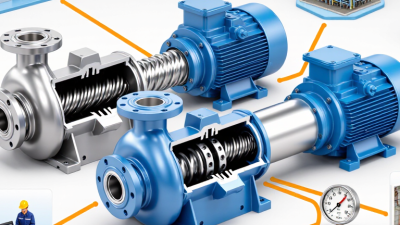
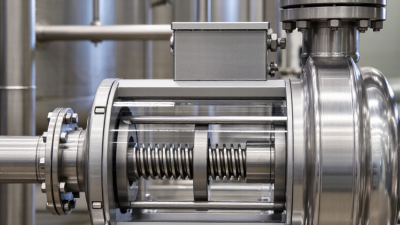
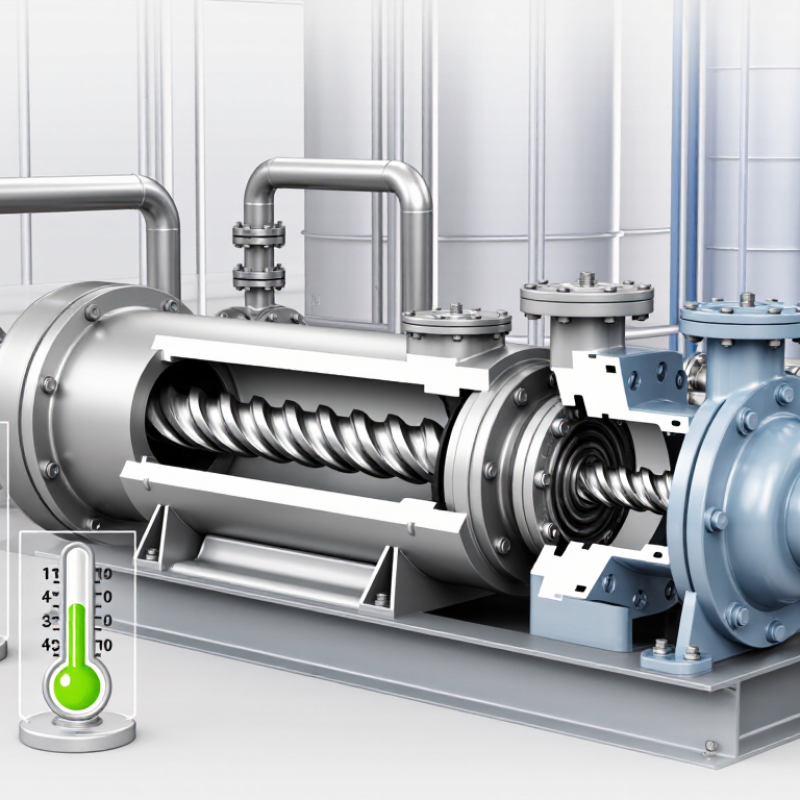
A twin screw pump is a positive-displacement machine. Two intermeshing screws rotate inside a close-fitting casing, usually driven through timing gears that keep them from touching. As the screws turn, liquid fills cavities between the screw flights and casing. Those sealed pockets travel along the screw axis, carrying fluid from suction to discharge. The motion is steady, not perfectly pulse-free.

This matters when pumping viscous liquids. A warm, thick product may move smoothly, while a cold start can raise torque and slow flow. Twin screw designs can handle changing viscosities and, in suitable configurations, some entrained gas. But “handles gas” is not a blank cheque: actual limits depend on design, speed, pressure, and the fluid. A clear suction line helps; so does checking for air leaks and cavitation.

The U.S. Department of Energy’s Improving Pumping System Performance sourcebook reports that pumping systems use nearly 20% of global electricity, and can account for 25–50% of energy use in some industrial facilities. These are system-wide figures, not twin-screw-pump performance claims. Still, they show why operating conditions matter. A pump running far from its intended duty point can waste energy. In practice, selection starts with measured flow, viscosity, temperature, pressure, and gas content—not just pipe size. One detail is easy to miss: viscosity changes with temperature, sometimes more than expected.

Define Fluid Properties and Process Requirements

7 Tips for Choosing the Right Twin Screw Pump?
Define Fluid Properties and Process Requirements

Fluid definition should come before pump selection. Record viscosity, density, temperature, solids content, shear sensitivity, and corrosiveness. Do not rely on product names alone. “Syrup” may mean 500 or 50,000 mPa·s. That difference changes speed, torque, and power requirements.

Measure the fluid at actual process temperatures. A laboratory sample at 20°C may behave differently at 80°C. Note whether viscosity changes during mixing, heating, or cooling. Twin screw pumps can handle variable viscosities, but excessive speed may damage fragile particles or create unwanted heat. Check particle size, concentration, and allowable shear. A small error here can become a large maintenance cost.

Process requirements need equal attention. Specify flow rate, suction conditions, discharge pressure, operating hours, cleaning method, and required turndown. The U.S. Department of Energy reports that pumping systems can represent 25–50% of industrial electricity consumption, so efficiency deserves early review. Hydraulic Institute guidance also stresses system-level assessment rather than judging a pump alone. Compare the duty point with real operating conditions, not an ideal catalogue value.

I have seen projects overstate peak flow and undersize the suction line. That choice often causes noise, cavitation, and unstable feeding. Recheck the numbers. Ask for test data using a comparable fluid, especially when the product is aerated, abrasive, or temperature-sensitive. A reliable selection records assumptions clearly, including the ones that may later prove wrong.

Compare Pump Capacity, Pressure, and Speed

A twin screw pump must match the real process, not just the number on a specification sheet. Start by estimating the required flow across normal operation, startup, and cleaning. Then check whether the pump can deliver that capacity at the expected pressure. A pump sized only for peak flow may run inefficiently during quieter hours.

Tip: Compare the pump’s pressure rating with both routine line resistance and likely pressure changes, such as a partially closed valve. Leave a sensible operating margin, but avoid oversizing without a reason. Excess capacity can mean unnecessary energy use and harder flow control. Measure fluid temperature and viscosity, too; a thick product may reduce actual capacity even when the speed stays constant.

Speed matters. Higher rotational speed can increase flow, but it may also raise shear, noise, and wear. For a viscous liquid, a slower speed may provide steadier transfer. Ask for performance data at your fluid’s actual viscosity and operating temperature. If those values are unknown, the selection is partly a guess. Check the duty cycle and expected flow range with a qualified pump specialist before finalizing the choice. A small mismatch here can become an expensive daily irritation.

Evaluate Materials, Maintenance, and Total Cost

7 Tips for Choosing the Right Twin Screw Pump?

Evaluate Materials, Maintenance, and Total Cost

Material compatibility is a practical starting point. Check the fluid’s temperature, viscosity, and chemical properties against the pump’s casing, screws, and seals. A mildly abrasive product may wear internal surfaces faster than expected. Ask for material recommendations based on actual operating conditions, not just a product label. Small details matter.

Maintenance access deserves equal attention. Look at how technicians inspect seals and remove the screw elements, and confirm that routine checks do not require major pipework changes. Request a clear schedule for lubrication, seal replacement, and wear inspections. A pump that is easy to open can reduce downtime, but only if suitable parts and trained service are available.

Compare total cost over the expected service life, not just the purchase price. Include energy use, installation, spare parts, cleaning time, and planned stoppages. A lower-cost unit may need more frequent repairs; a premium unit may not pay back in every application. Estimate costs using your own duty cycle and fluid data. Those estimates can still miss the mark, so review them after the first months of operation.

7 Tips for Choosing the Right Twin Screw Pump? - Evaluate Materials, Maintenance, and Total Cost

Tip Selection Area What to Evaluate Practical Check Cost or Risk Impact
1 Define the operating envelope Confirm the required flow range, differential pressure, fluid viscosity, temperature, and whether flow must remain steady as operating conditions change. Provide normal, minimum, and maximum values—not just a single design point—and identify start-up or cleaning conditions. Correct sizing can help avoid inadequate capacity, unnecessary oversizing, and inefficient operation.
2 Match materials to the fluid Check the compatibility of casing, screws, liners, and other wetted parts with the fluid’s chemistry, temperature, abrasiveness, and cleaning agents. Review a written material-compatibility assessment. Stainless steel, duplex alloys, and wear-resistant options each suit different conditions; no material is universal. Suitable materials can reduce corrosion, erosion, contamination, and premature part replacement.
3 Choose seals and elastomers carefully Assess seal-face materials and elastomers against the pumped product, temperature range, pressure, cleaning chemicals, and any required leakage controls. Confirm the seal arrangement, flush or barrier-fluid requirements, and whether the fluid is hazardous, abrasive, or sensitive to contamination. A suitable seal configuration helps manage leakage risk and can reduce unplanned seal replacement.
4 Check suction and solids handling Review inlet pressure, suction-line layout, fluid temperature, entrained gas, and the size and concentration of any suspended solids. Compare available suction conditions with the pump’s requirements, keep suction piping appropriately sized, and verify the permitted particle size with the supplier. Good suction design helps limit cavitation, loss of prime, excessive wear, and avoidable downtime.
5 Plan maintenance and access Consider access to seals, bearings, and other service parts; cleaning needs; lifting requirements; and the skills and tools available to the maintenance team. Request the maintenance schedule, recommended spare-parts list, service instructions, and expected tasks for the actual application. Accessible equipment and planned spares can reduce repair time and the operational impact of service work.
6 Verify protection and controls Confirm motor and drive suitability, speed-control needs, instrumentation, and protection against operating outside the pump’s allowable limits. Review the system design for appropriate pressure relief or other overpressure protection. A positive-displacement pump should not be operated against a closed discharge without protection. Suitable protection can help prevent damage to the pump, drive, piping, and connected equipment.
7 Compare total cost of ownership Include purchase and installation costs, energy use, maintenance, spare parts, cleaning, downtime, and expected service life. Compare options using the same duty cycle, operating hours, fluid conditions, and energy assumptions; request lifecycle estimates with stated assumptions. The lowest purchase price may not deliver the lowest long-term operating cost.

Check Installation Needs and Supplier Support

Installation fit can decide whether a twin screw pump performs smoothly or becomes a maintenance headache. The U.S. Department of Energy’s Improving Pumping System Performance guide notes that pumping systems use a significant share of industrial electricity. That makes correct sizing and commissioning practical energy decisions, not minor details. Check pipe loads, available floor space, inlet conditions, and access for removing screws or seals. A pump that fits the drawing may still be awkward to service.

Tip: Ask the supplier to review your installation layout before purchase. Share fluid viscosity, temperature range, flow rates, suction conditions, and cleaning requirements. Request written guidance on alignment, baseplate support, startup checks, and minimum inlet pressure. The Hydraulic Institute’s pump-system guidance emphasizes evaluating the whole system, rather than selecting equipment from flow and pressure alone. That distinction matters with viscous or shear-sensitive products.

Tip: Test the support, not just the pump. Ask who will answer commissioning questions, supply replacement parts, and troubleshoot vibration or unexpected noise. Confirm response times and whether technicians can review operating data remotely. ISO 5199 provides technical requirements for centrifugal pumps, but twin screw installations have their own operating details; ask the supplier to document the applicable limits. One point is easy to miss: keep a record of baseline pressure, temperature, and vibration. You may not collect every reading perfectly, but a simple log can reveal a developing problem early.

7 Tips for Choosing the Right Twin Screw Pump

Compare the installation and supplier-support factors that most directly affect pump reliability, maintenance, and total operating performance. Scores use a practical 1–5 planning scale, where 5 indicates the highest priority.

Use this checklist to confirm process compatibility, hygienic or sanitary requirements, suction conditions, maintenance access, spare-parts availability, commissioning support, and lifecycle service coverage before purchase.